











If you've ever found a forgotten bar in the back of the pantry and unwrapped it to find a dusty, grayish-white film, you've met chocolate bloom. It looks a little alarming. It's also one of the most common questions people ask about chocolate, usually right after "is this still OK to eat?"
So why does chocolate turn white? By the time you're finished reading this post, you'll know the two kinds of bloom, how to tell which one you've got, whether it's safe (it is), how to fix it, and how to store chocolate so it doesn't happen in the first place. Handy timing, with Halloween candy and holiday gift boxes about to pile up on every counter.
If you just want storage tips, click here to jump straight to them.
Quick answer: Chocolate turns white because of bloom. Either the cocoa butter crystals have shifted and surfaced as a dull haze (fat bloom, usually from warmth or temperature swings), or moisture dissolved some sugar that then dried into a dusty coating (sugar bloom). Both are safe to eat. They just look and feel less nice.
Why does chocolate turn white?
Because its structure changed after it was made. A well-tempered bar is glossy because its cocoa butter is locked into small, orderly crystals. When those crystals change, or when sugar gets pulled to the surface, the bar starts scattering light instead of reflecting it, and you see white.
What is fat bloom?
Fat bloom is cocoa butter crystals rearranging into a larger, more stable form and showing up on the surface as a gray-white haze or swirly streaks. Warmth, temperature swings and poor tempering all speed it up.
Quick refresher from our post on what temperature chocolate melts at: cocoa butter can form six different crystal types, and type V is the one that gives chocolate its gloss, snap and clean melt. Type V isn't the most stable form, though. Given time and a little warmth, it slowly converts to type VI, and researchers have long associated that V-to-VI transition with fat bloom (Lonchampt & Hartel, 2004; Peschar et al., 2004). The bigger crystals scatter light, so the surface goes dull.
A few things make it happen faster:
- Temperature swings. A bar that goes warm-cool-warm (a car, a sunny windowsill) blooms faster than one kept steady. That same review found storage below about 64°F (18°C) keeps bloom to a minimum.
- Poor tempering. Under-tempered chocolate can develop big white spots within days.
- Fillings. Oil from nut-based centers can migrate into the chocolate shell and carry bloom with it, which is why filled bonbons often bloom before plain bars do.
What is sugar bloom?
Sugar bloom is caused by moisture. Water on the surface dissolves a little sugar, then evaporates and leaves the sugar behind as dry, gritty white crystals.
The classic culprit is the fridge. Take cold chocolate out into a warm kitchen and condensation forms on it, exactly like a glass of iced tea in July. Chocolate makers deal with the same problem in production, which is why Callebaut tells professionals to let chilled chocolate warm up for a few hours before unwrapping it.
How can you tell fat bloom from sugar bloom?
Touch it with a damp fingertip. If the white disappears, it's sugar bloom (the water dissolved the sugar crystals). If it stays, it's fat bloom (Food Processing).
You can often tell by looking, too. Fat bloom tends to look smooth, hazy or streaky. Sugar bloom looks finely speckled and feels rough (Live Science).
Is bloomed chocolate safe to eat?
Yes. Bloom is the chocolate's own cocoa butter or sugar sitting in a different spot, not mold and not a sign of spoilage. It's a cosmetic and texture issue (Live Science).
What you might notice is a chalkier bite and a melt that isn't quite as smooth. (If something looks fuzzy or smells off, that's a different conversation, and we'd toss it.)
Can you fix bloomed chocolate?
Yes, by melting it. Melting wipes out the crystal structure and redissolves the surface sugar, so the bloom is gone. From there you can re-temper it, or skip that step and bake with it.
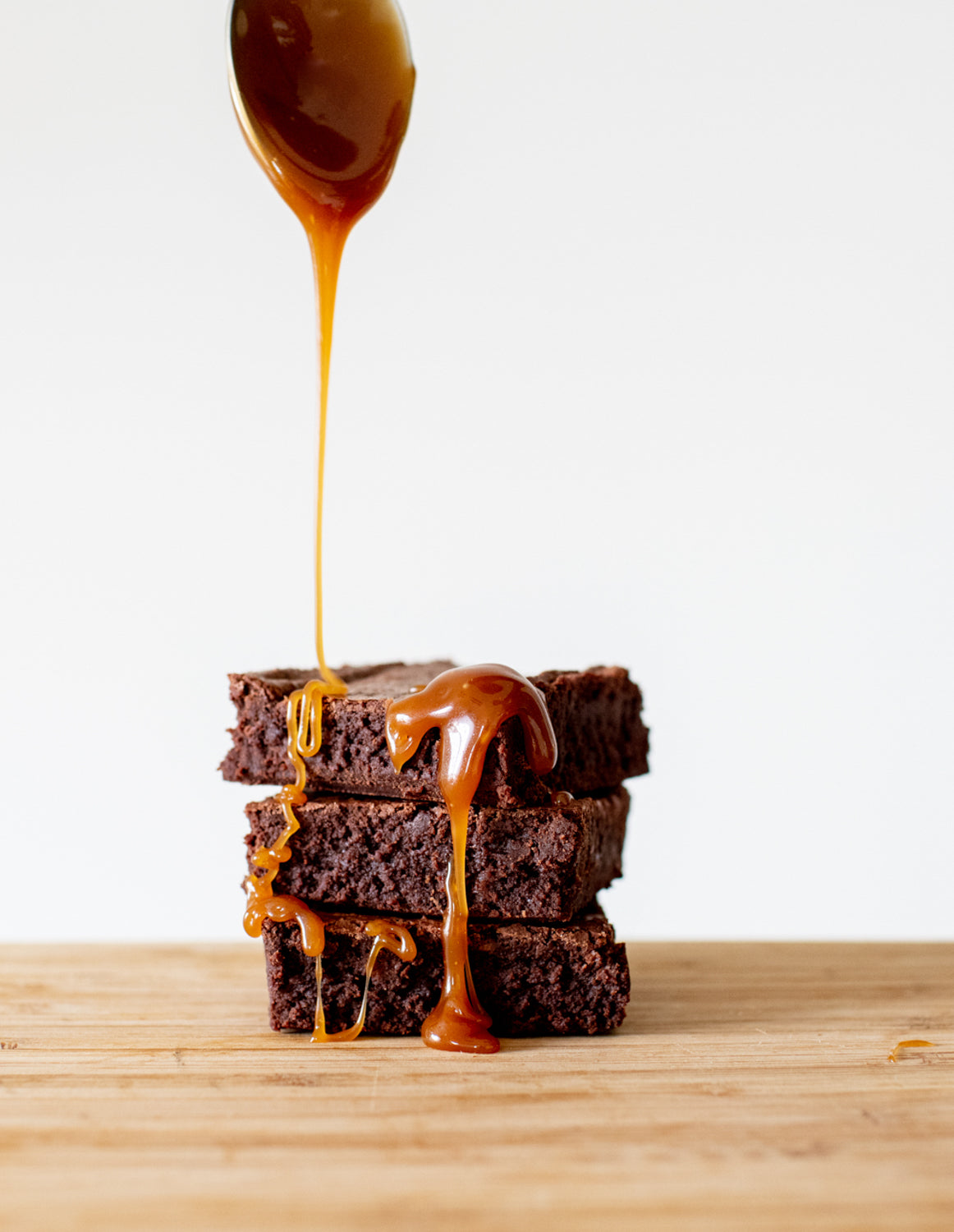
Baking is the easy win here. Nobody can see bloom inside a batch of dark chocolate brownies.
How do you keep chocolate from blooming?
Keep it cool, steady and dry. That's most of it.
- Find a cool, dark cupboard. Our rule of thumb is below 75°F and out of direct sunlight. Cooler is better for long storage.
- Avoid swings. Cars, windowsills and the shelf above the oven are where bars go to bloom.
- Skip the fridge if you can. If a heat wave forces it, wrap the bar airtight and let it come all the way to room temperature before you unwrap it.
- Gifting tip: if a box of bars has been sitting in a cold car or on a chilly porch, leave it wrapped until it warms up indoors.
What we do about bloom
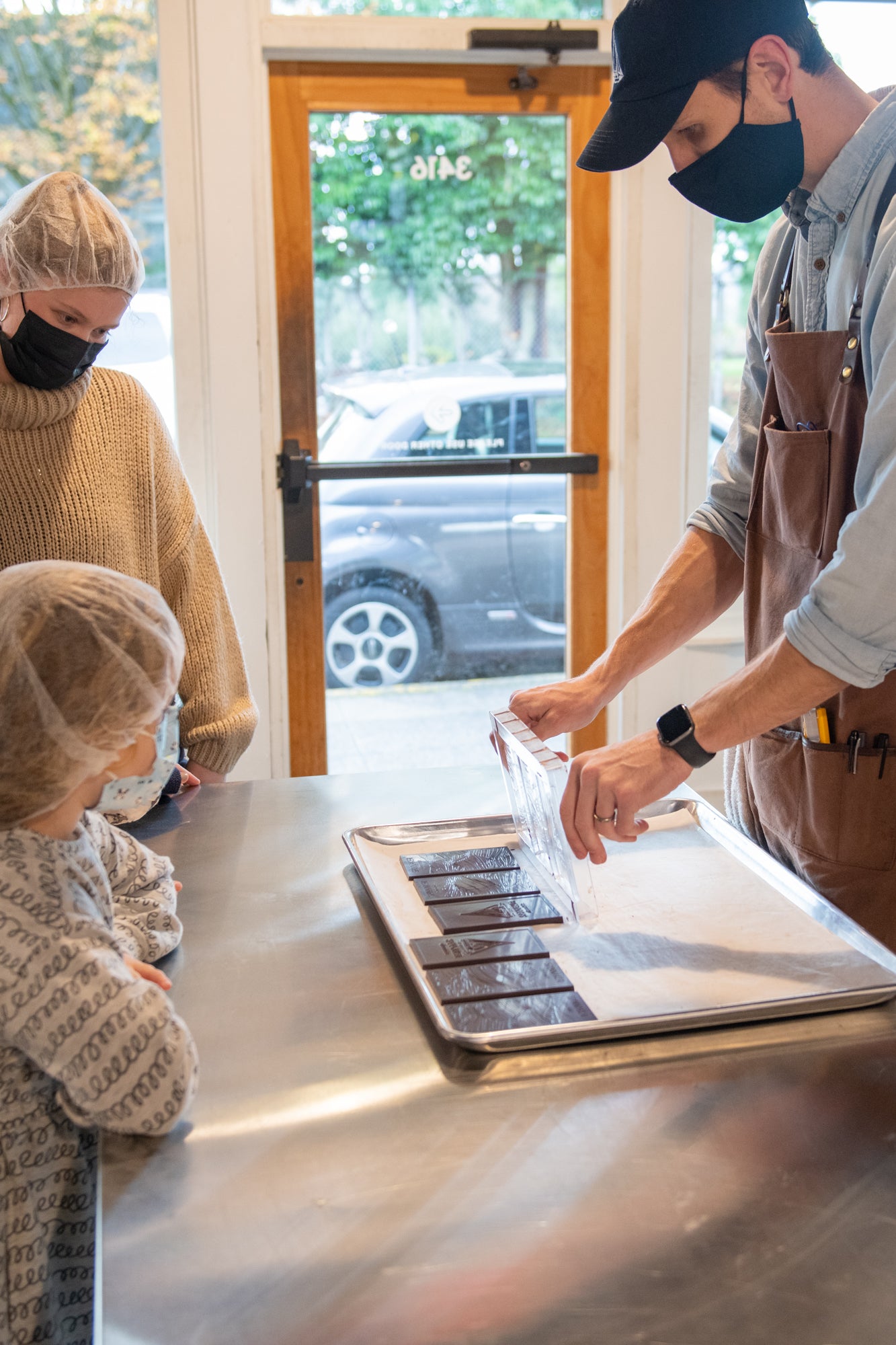
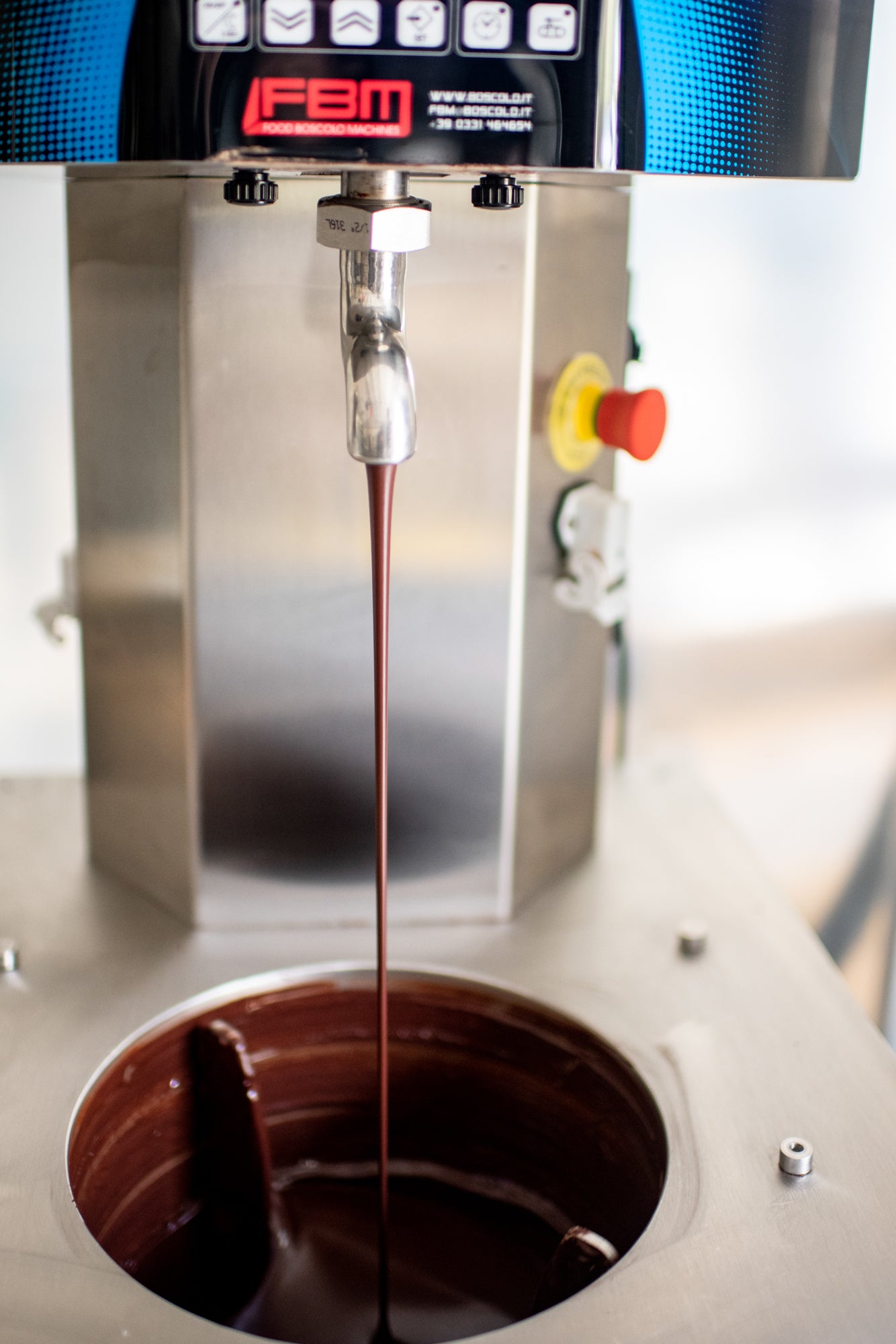
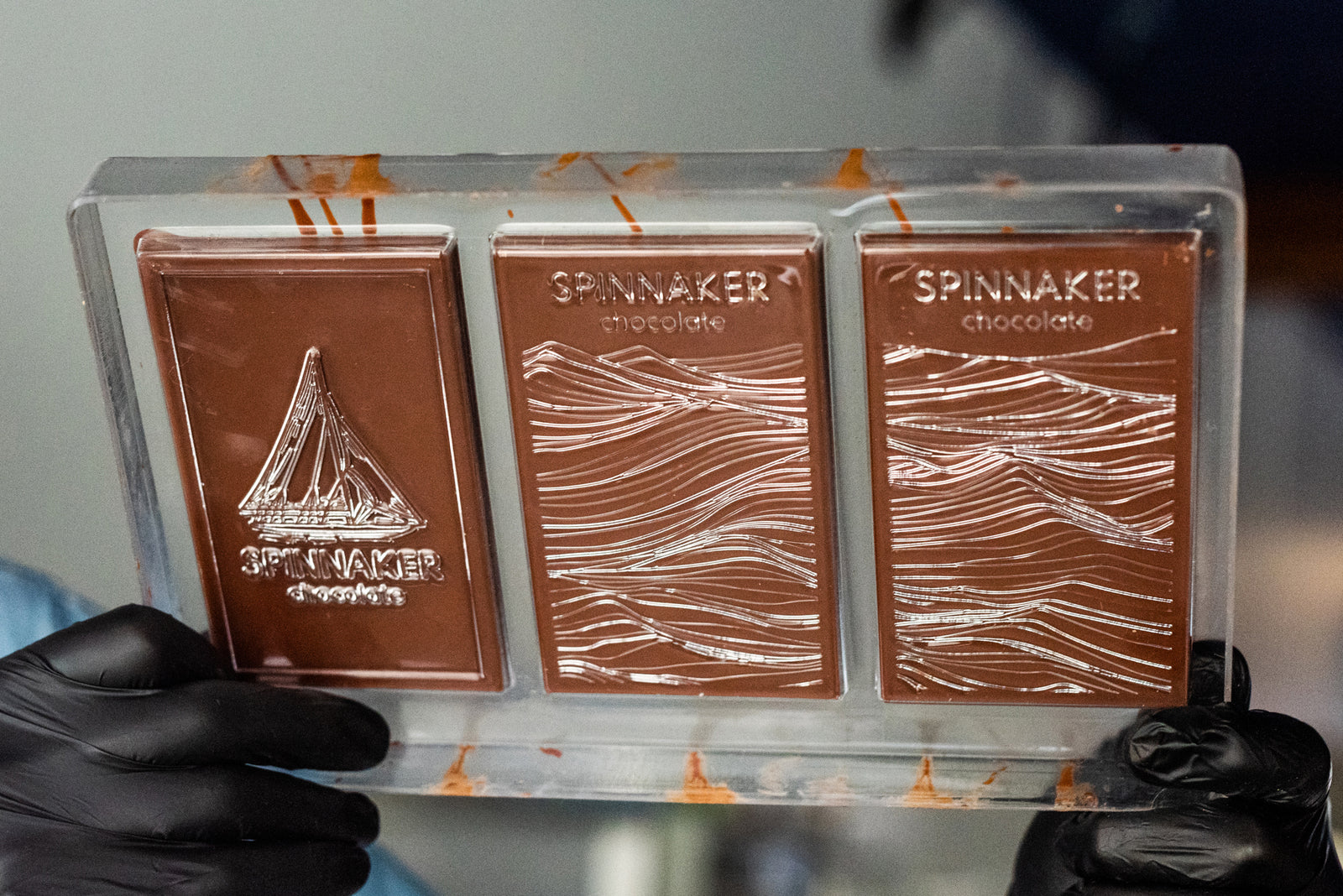
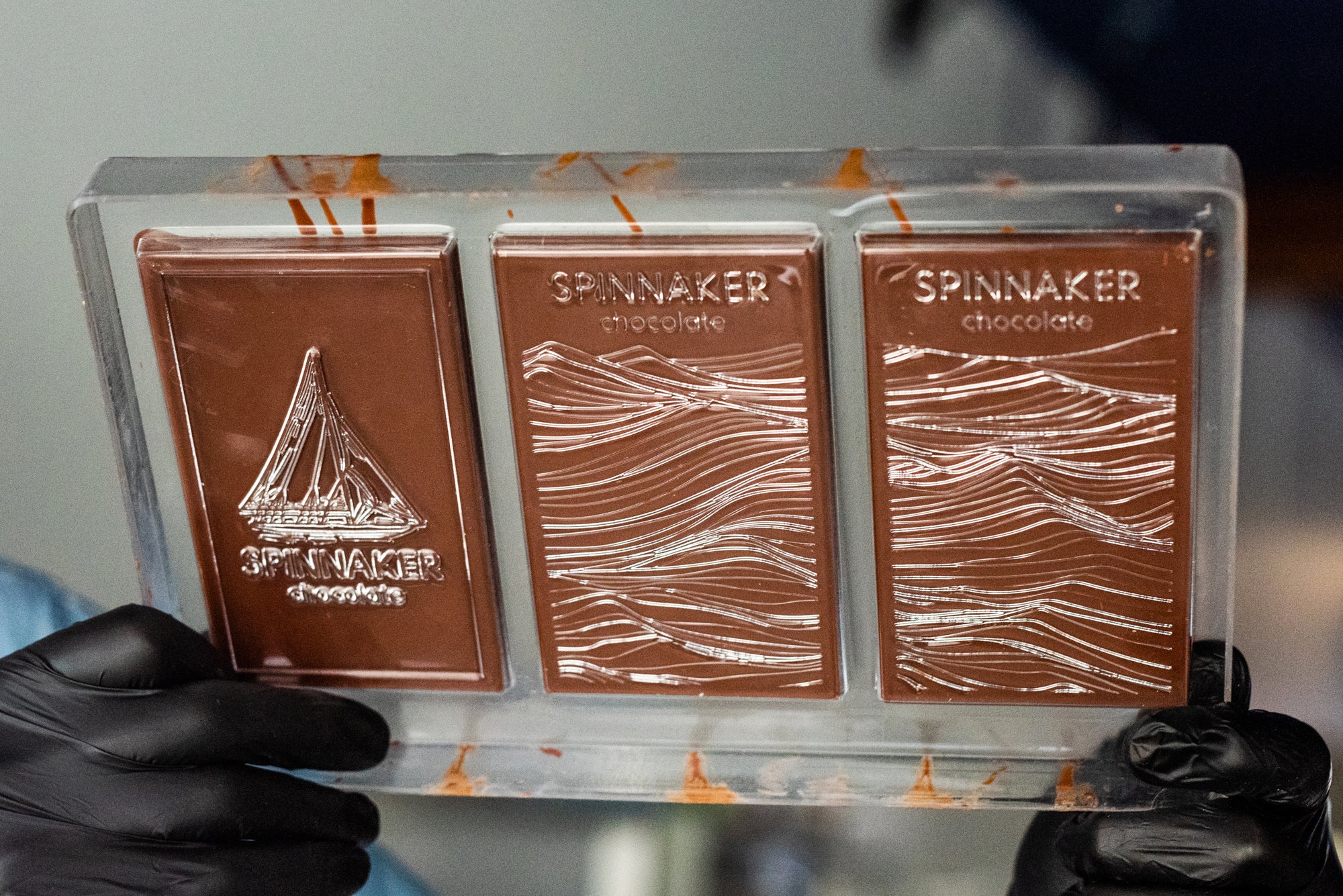
Every bar we make is tempered before it's molded. Our tempering machine melts the chocolate, then cools it to a specific temperature so it sets with the right crystals. From there we catch the chocolate in a mold and cool it in a cooling tower.
Finished bars are stored in our factory, which stays at a steady 70°F. That's comfortably under our 75°F rule of thumb, and steady is the part that matters.
If a Spinnaker bar ever shows up bloomed, email a photo to support@spinnakerchocolate.com and we'll take a look.

70% Belize — A plain dark bar is the easiest place to see what good temper looks like: gloss, a clean snap and a smooth melt.

58% Holiday Oatnog — Our holiday bar, and a good one to tuck into a gift box (just keep it out of the hot car and the fridge).
FAQ
Does bloom mean chocolate has expired?
No. Bloom tells you how the chocolate was stored, not that it's gone bad. Plenty of fresh bars bloom after one warm afternoon, and plenty of older bars never do.
Is the white stuff on chocolate mold?
Almost always no. It's cocoa butter (fat bloom) or sugar (sugar bloom). The damp-fingertip test tells you which.
Should I store chocolate in the fridge?
Generally no. The fridge invites sugar bloom from condensation. A cool, dark cupboard below 75°F works better. If you have to refrigerate it, wrap it airtight and let it warm up before unwrapping.
Does bloomed chocolate taste different?
A little, mostly in texture. It can feel chalky or gritty and melt less smoothly. Melting it down for baking takes care of that.
Bloom is really just chocolate telling you where it's been. Keep it cool and steady and it'll stay glossy. And if it doesn't, well, that's what brownies are for.
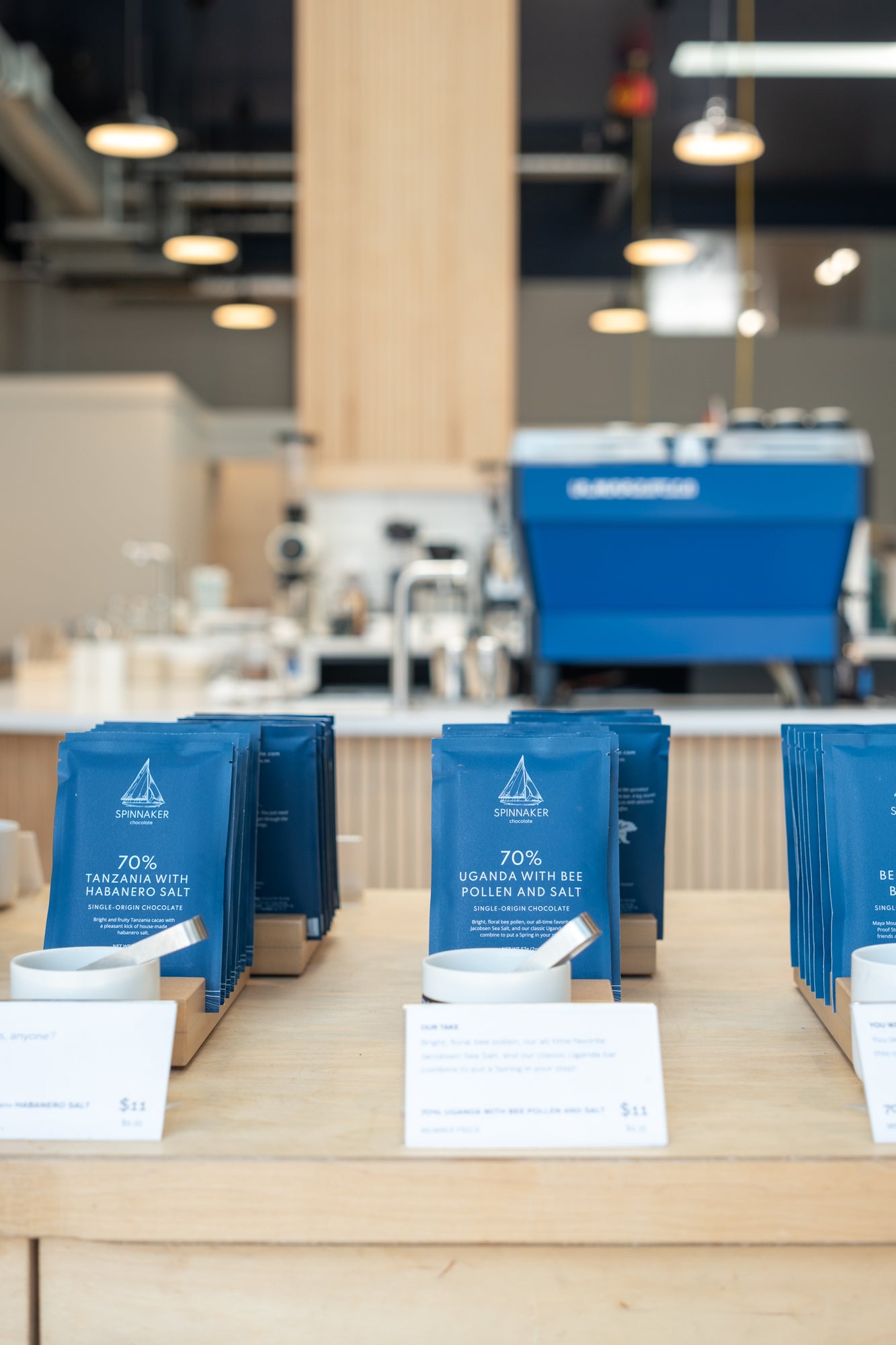
P.S. Want to see (and taste) a well-tempered bar at its glossiest? Come visit our factory, storefront and café at 3509 Stone Way N, Seattle, WA 98115.



Leave a comment (all fields required)